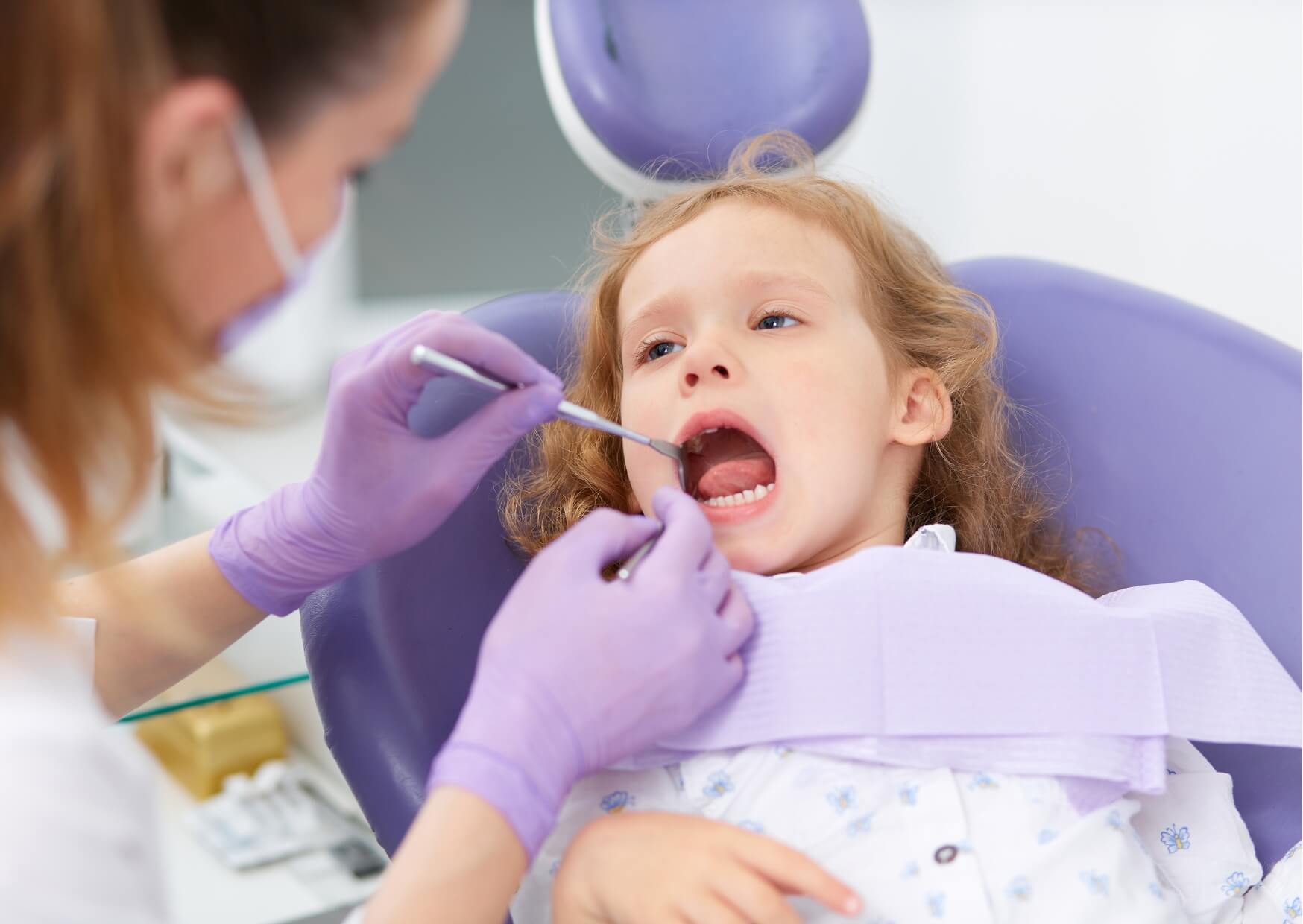
When a child loses a baby tooth too early, the space for the adult tooth can start to shrink. Nearby teeth may drift into that opening, which can affect how the permanent tooth comes in later.
A dental spacer for kids, also called a space maintainer, is a small appliance that helps hold that space open. Dentists often recommend one when a baby tooth is lost from decay, injury, or extraction well before the normal time.
Downtown Dental Nashville provides children's dentistry in Nashville, TN and can evaluate early tooth loss and space management to see if a spacer is appropriate.
Baby teeth do more than help with chewing and speech. They also guide permanent teeth into position as the jaws grow.
When one comes out too soon, the teeth next to it may tip or slide into the gap. In some children, that movement starts sooner than parents expect.
That is why dentists pay close attention to the timing of early tooth loss. A space that looks fine right after an extraction may not stay that way for long.
A dental spacer, often called a space maintainer, is designed to keep a missing tooth space available until the permanent tooth is ready to erupt. It does not push teeth into place. Its job is to prevent unwanted movement.
This matters most in growing mouths, where teeth, bone, and bite relationships are all changing. Preserving space early may help prevent migration, reduce crowding, and lower the chance of a more complicated orthodontic problem later.
An impacted tooth is a tooth that cannot come in normally because something blocks its path. Space loss is one reason that can happen; read more about impacted teeth.
A child may need a spacer after a baby molar is removed early. This is one of the most common situations because back teeth help maintain arch length, or the amount of room available in the dental arch.
Spacers may also be considered after trauma, severe decay, or a baby tooth that did not develop normally. The decision depends on the child’s age, which tooth was lost, how much space is left, and how soon the adult tooth is expected.
Not every missing baby tooth needs treatment. If the permanent tooth is close to erupting, or if the timing is appropriate for that child’s development, a dentist may simply monitor the area.
A pediatric or family dentist experienced in children’s care can make that assessment and suggest monitoring or placement as appropriate; see our children's dentistry services for more on routine care for growing smiles.
Parents often notice a gap after a tooth is removed and assume it will stay open. Sometimes it does, but in other cases the neighboring teeth begin to lean, especially in the back of the mouth where changes are harder to see.
A child may also start trapping food in the area, chewing differently, or saying that something feels odd along the gumline. These signs do not always mean a spacer is needed, but they are good reasons to ask for an exam.
If a child has several cavities, a history of early extractions, or crowding that runs in the family, space management becomes more important. Those patterns can increase the chance that one lost tooth affects the rest of the bite.
Children’s mouths change quickly. Teeth erupt, the jaws grow, chewing patterns mature, and the upper and lower teeth learn to fit together in a stable bite.
When a tooth is lost early, the effect is not always limited to that one spot. A shift in one area can influence how opposing teeth meet, how food is chewed, and how later teeth emerge into the arch.
This does not mean every child will develop a major bite problem. It does mean that space loss can affect more than one tooth, which is why dentists look at the whole system rather than just the gap.
The dental exam usually starts with the basics: which tooth was lost, when it was lost, and whether the surrounding teeth have already moved. The dentist also checks the bite, gum health, oral hygiene, and whether the child can tolerate an appliance safely.
If your child is nervous, resources on managing dental anxiety can help. A calm visit often makes evaluation and treatment easier.
X-rays are often important because they show the developing permanent tooth underneath the gums. They help estimate eruption timing and reveal whether the adult tooth is present, delayed, or coming in at an unusual angle.
When imaging is needed, detailed scans such as dental X-rays can improve planning for spacer placement; learn more about digital X-rays.
The dentist may also look at crowding, jaw size, and how much room is available overall. In some children, the question is not just whether to hold space, but whether there is enough space to preserve in the first place.
A spacer is most useful when it is placed before significant space is lost. If nearby teeth have already drifted, the plan may change from holding space to discussing orthodontic correction or another interceptive approach.
That is one reason early follow-up after an extraction matters. Waiting several months without review can make a simple problem harder to manage.
The most common spacers for children are fixed appliances. These are usually attached to a tooth and stay in place until the dentist removes them.
One common design uses a metal band around a tooth with a small wire extending into the space. Another version may be used when more than one tooth is missing or when support is needed on both sides.
Some children receive a removable appliance, but this is less common in younger patients because it depends on consistent wear and careful handling. Fixed appliances are often more predictable for children who are still building daily routines.
Fixed spacers usually work better when reliability is the priority. They cannot be misplaced easily, and they do not depend on a child remembering to put them back in after meals.
Removable options may be reasonable in selected cases, especially when the child is older and cooperative. The right choice depends on anatomy, timing, and how likely the appliance is to be worn as intended.
Placement is usually straightforward. The dentist measures the area, fits the appliance, and checks that it sits comfortably without interfering too much with the bite.
Children may notice the spacer with the tongue for a few days. Mild awareness is common at first, but persistent pain, swelling, or difficulty eating should be reported.
Follow-up visits matter because the mouth keeps changing. The dentist checks whether the spacer is still secure, whether the gums are healthy, and whether the permanent tooth is getting close to eruption.
A spacer is not meant to stay in forever. It is removed when the dentist sees that the adult tooth is ready to come in or when the treatment plan changes.
Good brushing around the appliance is important because plaque can collect near the band or wire. Plaque is the sticky film of bacteria that contributes to cavities and gum irritation.
Sticky foods and hard chewing habits can loosen or bend a spacer. Families usually do best when they think of it like any other dental appliance: helpful, but not indestructible.
If the spacer feels loose, breaks, or disappears, call the dental office rather than waiting for the next routine visit. A damaged appliance may stop protecting the space, and cement loss is one common reason these appliances fail.
A loose part can also become a safety concern. For tips on daily routines and encouraging consistent care, see dental habits for kids.
A spacer is not automatically needed every time a baby tooth is missing. If the permanent tooth is close to erupting, if there is little risk of movement, or if the child’s growth pattern suggests another approach, monitoring may be enough.
In other situations, the main issue is not maintaining space but managing crowding, eruption delay, or bite development. That may lead to referral for pediatric dental follow-up, orthodontics evaluation, or both.
This is where individualized care matters. The same missing tooth can mean different things in a 5-year-old, a 9-year-old, and a child with delayed eruption.
When used appropriately, a spacer helps preserve room for the permanent tooth and may simplify future treatment. It does not guarantee perfect alignment, but it often protects against avoidable space loss.
How long it stays in place depends on the child’s age and the eruption stage of the adult tooth. In some cases that is a few months, while in others it may be longer.
Regular review is part of the treatment, not an extra step. As the permanent tooth starts moving upward, the dentist decides when the spacer should come out.

Contact the dental office promptly if a spacer becomes loose, bent, painful, or difficult to clean. Also call if the child avoids eating, develops gum swelling, or says the appliance suddenly feels different.
Seek urgent care if there is significant swelling, fever, trouble swallowing, injury to the mouth, or concern that part of the appliance was inhaled or swallowed. These problems are not common, but they should not be watched at home without guidance.
If a child loses a baby tooth much earlier than expected and no follow-up plan is in place, it is worth scheduling an evaluation. Early review can prevent a small spacing issue from becoming a larger bite problem.
If you are unsure whether a missing baby tooth needs monitoring or a spacer, a pediatric or family dentist can assess the timing, the available space, and the path of the developing adult tooth before changes become harder to manage.
Downtown Dental Nashville offers children's dentistry in Nashville, TN and nearby East Nashville and Germantown. Call (615) 254-1393 to schedule an appointment.
No. The need depends on which tooth was lost, the child’s age, how soon the permanent tooth is expected, and whether nearby teeth are likely to drift.
Placement is usually well tolerated. A child may notice the appliance at first, but ongoing pain is not expected and should be checked.
It varies. Some spacers stay in place for a few months, while others remain longer until the permanent tooth is ready to erupt.
Most children return to normal eating quickly, though sticky or very hard foods may be more likely to damage the appliance. The dentist will usually give practical food guidance based on the specific spacer.
Call the dental office as soon as possible. The space may begin to change, and the dentist will decide whether the appliance should be repaired, replaced, or no longer needed.
| Monday | 7:00 AM – 5:00 PM |
| Tuesday | 7:00 AM – 5:00 PM |
| Wednesday | 7:00 AM – 5:00 PM |
| Thursday | 7:00 AM – 5:00 PM |
| Friday | 7:00 AM – 3:00 PM |
| Saturday | Closed |
| Sunday | Closed |