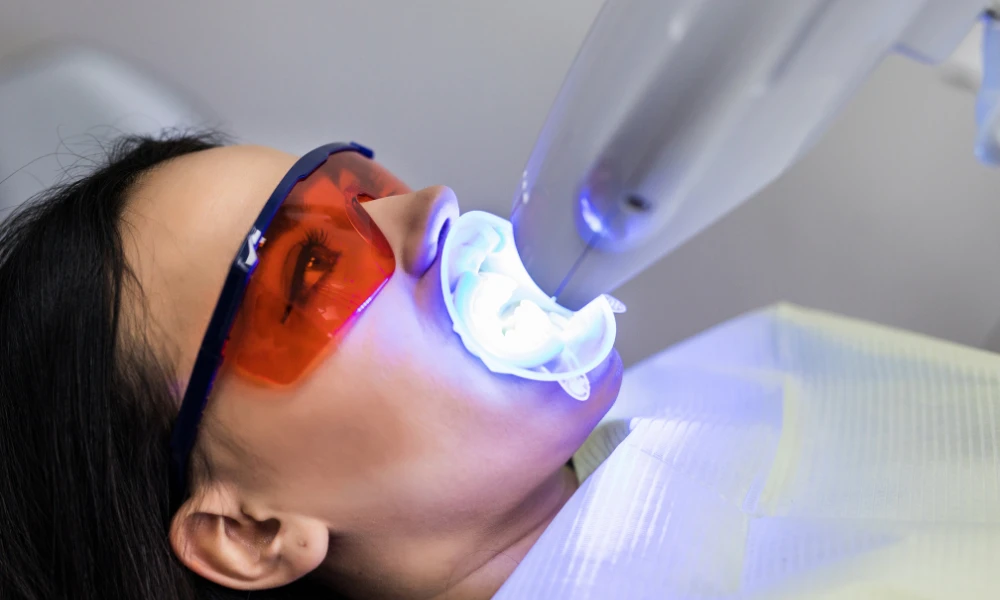
Teeth whitening improves tooth color by breaking down surface and internal stains, but results vary based on enamel condition, habits, and treatment type. Professional whitening typically produces more consistent results than over-the-counter options.
At Downtown Dental Nashville, whitening is often integrated into a broader cosmetic and functional approach, considering bite alignment, enamel health, and long-term stability.
Quick Facts
- What it is: A cosmetic treatment that lightens tooth color using peroxide-based agents
- Who it is for: Patients with staining from food, beverages, aging, or lifestyle habits
- Main benefits: Brighter appearance, improved smile aesthetics
- Limitations: Temporary results, possible sensitivity, not effective for all stains
- Timeline / durability: Results visible after one session; may last months to years with maintenance
What Happens During Teeth Whitening?
Teeth whitening involves applying a whitening agent that penetrates enamel to break down stain molecules. The process varies depending on the method used.
In-Office Whitening
- Higher concentration whitening gel
- Controlled application by a dental professional
- Faster and more noticeable results
Take-Home Whitening
- Custom trays provided by the dentist
- Lower concentration gel used over time
- Gradual improvement over several days or weeks
Professional whitening through tooth whitening allows for controlled and predictable outcomes.
What Results Can You Expect?
Teeth whitening results depend on the type and depth of staining. Not all discoloration responds equally.
Types of Stains
- Extrinsic stains: Caused by coffee, tea, wine, or smoking; respond well
- Intrinsic stains: Caused by aging or medication; may respond partially
- Developmental discoloration: May require alternative cosmetic treatments
Result Expectations
- Most patients see a noticeable lightening of several shades
- Results are not permanent and may require maintenance
- Uniformity depends on existing enamel condition
If discoloration is severe, treatments like dental veneers may be considered.
Does Teeth Whitening Cause Sensitivity?
Teeth whitening may cause temporary sensitivity due to enamel permeability and nerve response. This effect varies between individuals.
Common Sensitivity Triggers
- High-concentration whitening agents
- Pre-existing enamel thinning
- Gum recession exposing dentin
What to Expect
- Mild sensitivity lasting 24–72 hours
- Temporary discomfort when consuming hot or cold foods
- Gradual reduction after treatment
Patients with jaw tension or bite-related sensitivity may benefit from evaluation through TMJ treatment.
How Long Do Whitening Results Last?
Whitening results last based on lifestyle habits and oral care routines.
Factors Affecting Longevity
- Diet: Coffee, tea, and wine may restain teeth
- Smoking: Accelerates discoloration
- Oral hygiene: Regular cleaning helps maintain results
Maintenance Timeline
- Touch-ups may be needed every 6–12 months
- Professional cleanings help extend brightness
Routine care such as professional cleanings screenings supports longer-lasting results.
Who Is a Good Candidate for Teeth Whitening?
Teeth whitening is most effective for patients with healthy enamel and surface-level discoloration.
Ideal Candidates
- Patients with yellow-toned staining
- Individuals with good oral health
- Patients without extensive restorations on front teeth
Not Ideal Candidates
- Severe intrinsic discoloration
- Large fillings or crowns on visible teeth
- Active gum disease or untreated decay
If structural issues exist, treatments like dental fillings or crowns may be addressed first.
How Whitening Fits Into a Full Smile Plan
Teeth whitening is often one step within a broader cosmetic or functional treatment plan.
Combined Treatments
- Whitening before veneers for color matching
- Whitening before bonding or restorations
- Whitening alongside alignment improvements
For comprehensive results, whitening may be combined with services under cosmetic dentistry.
What Can Affect Whitening Results
Multiple factors influence how well teeth respond to whitening treatment.
Key Influences
- Enamel thickness: Thinner enamel may show dentin color
- Age: Older teeth may respond differently
- Previous restorations: Fillings and crowns do not whiten
- Medication history: Certain stains may not respond
Conditional Logic
- If staining is surface-level → whitening is typically effective
- If staining is deep → alternative treatments may be needed
How Enamel and Dentin Influence Whitening Outcomes
Enamel thickness and underlying dentin color directly affect how white teeth can appear after treatment. Whitening agents act on enamel, but the final shade is influenced by what lies beneath.
Structural Factors
- Thick enamel: Reflects more light and may appear brighter after whitening
- Thin enamel: Allows darker dentin to show through
- Yellow-toned dentin: May limit how white teeth can become
- Gray or blue tones: May respond less predictably to whitening
Clinical Implications
- If enamel is strong and uniform → results are typically more noticeable
- If dentin is darker → whitening may produce softer improvement
- If discoloration is internal → alternative cosmetic options may be considered
Understanding enamel structure helps set realistic expectations for whitening results.
What to Avoid After Whitening
Post-treatment habits affect how long results last and whether sensitivity occurs.
Avoid Immediately After Treatment
- Coffee, tea, red wine
- Smoking or tobacco products
- Highly pigmented foods
Recommended Practices
- Drink water after meals
- Maintain regular brushing and flossing
- Follow dentist instructions for aftercare
How Lifestyle Habits Impact Whitening Results Over Time
Lifestyle habits determine how quickly teeth may become discolored again after whitening. Daily exposure to pigments and acids affects enamel appearance.
High-Impact Habits
- Frequent coffee or tea consumption: Causes gradual staining
- Smoking or tobacco use: Accelerates discoloration
- Highly pigmented foods: Such as berries or sauces
Protective Habits
- Rinsing with water after meals: Helps reduce stain buildup
- Using a straw for beverages: Limits contact with front teeth
- Consistent oral hygiene: Reduces surface accumulation
Conditional Guidance
- If staining habits continue → touch-ups may be needed sooner
- If habits are controlled → results may last longer
- If discoloration returns unevenly → evaluation may help determine the cause
Maintaining results depends on daily habits as much as the initial treatment.
How Technology Improves Whitening Outcomes
Advanced imaging and diagnostics help determine suitability and improve treatment planning.
Technology Benefits
- Identifies enamel condition
- Detects underlying structural issues
- Guides treatment customization
Tools like advanced imaging support more accurate evaluation before whitening.
When Whitening May Not Be the Best Option
Teeth whitening is not always appropriate depending on the condition of the teeth.
Situations Where Alternatives Are Better
- Severe discoloration
- Structural damage
- Significant enamel loss
In these cases, restorative or cosmetic alternatives may provide more predictable results.
FAQ
How long does teeth whitening take?
In-office whitening can be completed in one visit, while take-home options may take several days.
Will whitening damage my teeth?
When performed correctly, whitening is generally safe and does not damage enamel.
Can whitening remove all stains?
Not all stains respond equally; some may require alternative treatments.
How often can I whiten my teeth?
Frequency depends on enamel health and dentist recommendations.
What to Do Next
Teeth whitening results depend on stain type, enamel condition, and overall oral health. Understanding what to expect helps determine whether whitening alone will meet your goals.
If you are noticing discoloration, sensitivity, or uneven color, identifying the cause helps determine whether whitening or another treatment is more appropriate.
If this applies, a professional evaluation may help guide the best approach for your smile.To explore your options and create a personalized whitening plan, you can request a consultation with Downtown Dental Nashville and evaluate the next steps based on your oral condition.