Thoroughly clean teeth with proper brushing technique. Brushing only takes 2 minutes and you can most definitely keep your teeth at a grade A+ level with a manual toothbrush.
Multiple toothbrush styles, bristles, heads and colors to choose from. You have the ability to choose soft bristles if you have sensitive gums, and a smaller head if you have a smaller mouth. Some brands even make special prints on toothbrushes for children. Nevertheless, you’ll never be short of options with manual toothbrushes.
Easy to travel with. All you need is a toothbrush case and you’re all set to go for your trip. No need to worry about batteries or charging outlets.
No batteries or charging.
Inexpensive and often free whenever you make a trip to your dentist. Keep in mind that you should ditch your toothbrush after about 3 months of use.
Manual Toothbrush/CONS
More work.
No timing. Manual toothbrushes require you to guess how long your brushing session will last (unless you set a two-minute timer).
Electric Toothbrush/PROS:
Easy to use. With a powered toothbrush, all you need to do is place the toothbrush at a 45° angle and let the toothbrush do all the work.
Less work for better results. Studies have shown that electric toothbrushes do a better job of cleaning your mouth and removing plaque and gingivitis.
More fun to use for children. Children like to take the easy way out on chores. If a child never brushes their teeth because they don’t want to, try having them use an electric toothbrush. It’s less work, it tickles their teeth, and the timer will let them know they’re all done! It’s a lot easier (and more fun).
Built in timer. Electric toothbrushes use a built in timer that stops the toothbrush once two minutes are up; no more guessing!
Electric Toothbrush/CONS:
Charging. You’ll either have to charge your toothbrush or replace its batteries.
Cost. Electric toothbrushes cost significantly more than a manual toothbrush. There are several types of powered toothbrushes but be prepared to pay more than you usually do.
Not as easy to travel with. Traveling with an electric toothbrush can be a hassle. They are bulky and bringing a charger along doesn’t help with room constraints.
Easy to break. Dropping your toothbrush can be fatal. You have to be more careful whenever using an electric toothbrush.
One last thing to point out: there have been a few studies that prove electric toothbrushes remove statistically significant more plaque compared to manual toothbrushes and are better at fighting gum disease. Despite the studies, your oral health will remain healthy (despite which type of toothbrush you use) as long as you consistently take care of your teeth. If you are on the fence of buying a powered toothbrush, talk to Dr. Clark the next time you come in for a cleaning.
Are You Being Treated with Chemotherapy for Cancer?
While chemotherapy helps treat cancer, it can also cause side effects. Some of these problems affect the mouth and could cause you to delay or stop treatment - but there are ways to help decrease these problems so you’ll get the most from your cancer treatment. To help prevent serious problems, see a dentist at least two weeks before starting chemotherapy.
How Does Chemotherapy Affect the Mouth?
Chemotherapy is the use of drugs to treat cancer and other diseases. These drugs kill cancer cells, but they may also harm normal cells, including cells in the mouth. Side effects include problems with your teeth and gums; the soft, moist lining of your mouth; and the glands that make saliva, as well as an increased likelihood of cold sores and other mouth infections.
It’s Important to Know Side Effects in the Mouth Can be Serious
The side effects can be painful and make it hard to eat, talk, and swallow.
You are more likely to get an infection, which can be dangerous, when you are receiving treatment.
If the side effects are bad, you may not be able to keep up with your cancer treatment. Your doctor may need to cut back on your treatment or may even stop it.
What Mouth Problems Does Chemotherapy Cause?
The problems depend on the chemotherapy drugs and how your body reacts to them. You may have these problems only during treatment or for a short time after treatment ends.
Painful mouth and gums
Dry mouth
Higher risk of cavities
Burning, peeling, or swelling tongue
Infection
Change in taste
Why Should I See a Dentist?
If you go to the dentist before chemotherapy begins, you can help prevent serious mouth problems. Side effects often happen because a person’s mouth is not healthy before chemotherapy starts. Not all mouth problems can be avoided but the fewer side effects you have, the more likely you will stay on your cancer treatment schedule. It’s important for your dentist and oncologist to talk to each other about your cancer treatment. Be sure to give your dentist your oncologist’s phone number.
When Should I See a Dentist?
You need to see the dentist at least two weeks before your chemotherapy begins. If you have already started chemotherapy and didn’t go to a dentist, see one as soon as possible. You should also see a dentist as recommended or needed during and after treatment.
What Will the Dentist and Dental Hygienist Do?
Check your teeth and gums.
Take X-rays if necessary.
Take care of mouth problems - especially infected teeth which may cause problems later.
Show you how to take care of your mouth to prevent side effects.
What Can I Do To Keep My Mouth Healthy?
See a dentist before you start cancer treatment. Ask about whether you may need artificial saliva, fluoride, and/or other rinses. Once your treatment starts, look in your mouth every day for sores or other changes. These tips can help prevent and treat a sore mouth.
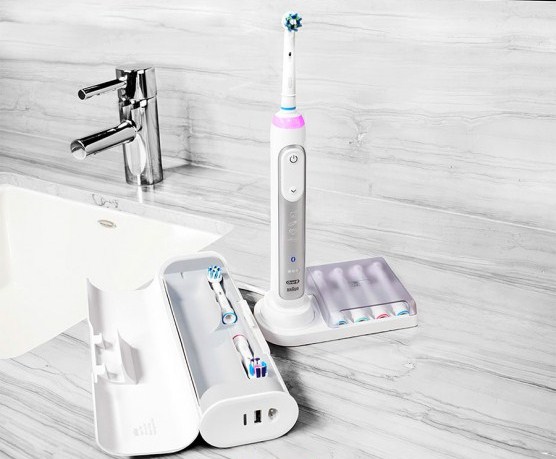
Leading dental manufacturer Oral B has unveiled a state of the art smart brush that uses sensors to follow the path of the brush.
Named Genius, the new brush works alongside an app, so you can use your phone to track your brushing progress and highlight potential areas of weakness. Research used to develop the product suggests that 80 percent of people aren’t brushing their teeth for long enough or paying enough attention to each quadrant of the mouth. 60 percent of people miss the molars at the back of the mouth completely or devote less time to them than other teeth.
Most patients aren’t brushing their teeth properly and this is contributing to an increased risk of oral disease. Even the most conscientious individual may be missing out key areas or spending less time on one part of the mouth than others. This new system detects brushing problems and encourages you to correct them and learn how to get the best out of your toothbrush. Sensors in the brush track the movement of the head, while the smart phone camera utilizes video recognition to follow the brush around the mouth.
Oral B revealed the exciting new product at the MWC 2016 in Barcelona. It is expected to be available in the summer.
A tongue scraper (also called a tongue cleaner or tongue brush) is an oral hygiene device designed to clean off bacteria, food debris, fungi, and dead cells from the surface of your tongue. Tongue cleaning has been around since ancient times in India. During sleep when the body is resting, the digestive system works to detoxify itself. These toxins are deposited on the surface of the tongue via the internal excretory channels, and are responsible for the coating usually seen on the tongue first thing in the morning. Tongue scraping has found its way into Western society as folks discover the benefits of cleaning the tongue every day.
5 Reasons to Scrape Your Tongue Every Day
1. Improves the breath:
Removing the bacteria, food debris, fungi, and dead cells from the tongue significantly reduces the odor from the mouth. You may have been told to use your toothbrush for this purpose, but brushing the tongue does NOT efficiently remove all of the film that develops on the tongue. You will be blown away the first time you do this by the amount of gunk that comes off of the tongue.
2. Improves your ability to taste:
Removing build-up from the surface of your tongue will better expose your taste buds. This will lead to better enjoyment of the flavors of your food. Ayurveda teaches that the better we enjoy and savor our food, the better our bodies digest and assimilate, leading to better over all health. Also, Ayurveda teaches that blocked taste buds and tongue receptors interferes with our body’s ability to communicate with our brain about what types of foods we need to maintain our health, leading to false cravings.
3. Avoid toxins being reabsorbed into your body:
As you sleep, your body is detoxifying. Much of the film on your tongue is toxins excreted from your body. You don’t want to re-ingest that do you? NO! Scraping your tongue first thing in the morning will remove this sludge from your tongue and from your body, improving your over all health and improving your immune system.
4. Improves dental health:
By removing bacteria and toxins, you are also contributing to better dental health as well, leading to healthier teeth and gums. The bacteria that you remove from your tongue are responsible for things like periodontal problems, plaque build-up, tooth decay, gum infections, gum recession, and even loss of teeth.
5. Get to know your tongue:
Did you know your tongue is a mirror reflection of your internal organs? Just like with hand or foot mapping, the tongue is mapped out to reflect various parts of your internal body. You can learn so much about what is going on in particular areas just by looking at your tongue every morning. Also, by scraping your tongue, you are actually stimulating and massaging those corresponding internal organs, just like in acupressure or acupuncture.
via Savory Lotus
How Does Coffee Stain Teeth?
Although the enamel of your teeth is the hardest substance in the human body, it is not flat and smooth. On the contrary, your tooth enamel contains microscopic pits and ridges that can hold particles of food and drink.
Pigments from dark-colored drinks such as coffee, tea, and soda can become embedded in those cracks and ridges and, if the proper steps are not taken, can cause permanent, yellowing stains on your teeth.
Does Coffee Stain Teeth Less If You Add Cream?
While it may seem that lighter-colored coffee would stain less, the same pigments and acids are present in coffee with cream as black coffee; thus, adding any sort of whitener to your coffee will not prevent your teeth from becoming stained, unless you put significantly less coffee in your cup to make room for the cream.
How Can One Prevent "Coffee Smile"?
Giving up coffee, tea, or other tooth-staining beverages is the best way to prevent the staining caused by those drinks, but for most people, this is not an acceptable solution.
Rather than abstaining, try to consume your coffee at specific break times, rather than sipping constantly throughout the day. After finishing your coffee, you can then rinse your mouth out with water or brush your teeth to remove the potentially yellowing pigments from your teeth.
Using a whitening toothpaste and brushing regularly is a good way to maintain whiter teeth at home. In addition, visiting your dentist's office for regular cleanings can remove many of the surface stains on your teeth, giving you a whiter smile, no matter how many cups of coffee you need to make it through the day.
The big misconception is that energy drinks and sports drinks are healthier than soda for oral health, but studies disproves that, because they erode or thin out the enamel of the teeth, leaving them more susceptible to decay and sensitivity.
The drinks are especially popular among teens and young adults. Up to half of U.S. teens and young adults drink energy drinks, and more than half have at least one sports drink a day, according to the researchers.
Researcher Poonam Jain, BDS, MPH, associate professor and director of community dentistry at the Southern Illinois University School of Dental Medicine and her team tested 13 sports drinks and nine energy drinks for acidity. They tested six drinks for their effects on tooth enamel and found both types caused damage. Energy drinks, however, were twice as bad. Remember:damaged tooth enamel cannot be fixed.
Jain's team immersed enamel samples from extracted human teeth into three sports drinks and three energy drinks.
They tested the acidity levels of all 22 drinks. They found the levels of acidity in the drinks vary between brands and between flavors of the same brands.
Sports drinks, energy drinks, and teeth: study details
Up to half of U.S. teens and young adults drink energy drinks, and more than half have at least one sports drink a day, according to the researchers. Other study results included:
Gatorade Blue had the highest acidity among sports drinks. Next was Hydr8.
Among the energy drinks with the highest acidity:
Red Bull Sugar=free
Monster Assault
5-hour Energy
Von Dutch
Rockstar
MDX had the lowest acidity of the energy drinks.
The sports drinks tested were:
Gatorade Rain
Powerade Option
Propel Grape
The energy drinks tested were:
Monster Assault
Red Bull
5-hour Energy
The enamel samples were immersed in the drinks for 15 minutes. The researchers transferred the enamel to artificial saliva for two hours.
This cycle was repeated four times a day for five days. The beverages were replaced with fresh ones every day.
The cycle was meant to simulate real life, Jain says, as some teens and young adults drink the beverages every few hours.
Enamel loss was evident after five days of exposure, Jain says.
The average enamel lost with sports drinks was about 1.5%, while the average loss with energy drinks was more than 3%. Jain says she cannot pinpoint what percent of enamel loss would cause problems.
Advice for sports drink lovers
Even one drink a day is potentially harmful, Jain says.
"If the consumer is absolutely unable to give them up, the best advice is to minimize [their use] and rinse with water afterwards," she says.
"Dilute them," she says. Do not brush immediately after drinking them, she says, as this could spread around the acid. "The mouth takes about 30 minutes to bring the pH back to normal. Wait an hour after drinking the sports or energy drink, to be safe, then brush."
It is very important to read labels on any drink you choose to prevent the cavities and gum disease that these drinks can cause. Also, be aware that the cream and sugar you put in your coffee in the morning has the same effect as other high sugar drinks.
The best drink of choice for the health of your teeth and gums is plain water. We're realistic though, and understand this can be difficult for anyone to regularly practice. If you’re going to have a soda or sweetened drink, be careful to drink them all in one sitting rather than sipping for a long time, and try to have a drink of water when you’re finished.
“Brush Your Teeth!” That was a term heard around my house, but what about flossing? Is it good enough just to brush? Proper and consistent brushing is very important, but flossing is even more important when it comes to preventing gum disease and tooth loss. Flossing cleans between the teeth where your brush cannot get, and food tends to hide and dental plaque develops. So if it’s so important, why do so many Americans not do it? According to recent studies, nearly half of all Americans say they do not floss.
Here are some tips on how to floss better:
Commit to flossing at least once a day for three to five minutes.
Use at least 18 inches of floss and wrap most around your middle fingers to begin, gently flossing through the contours of your teeth.
Think you cannot floss, or have a pain in your hands? Use a floss holder (disposable plastic Y-shaped device) instead of traditional floss.
Consider purchasing a Waterpik, a new water flossing device on the market that power cleans between teeth and gums.
Keep a travel size floss with you for post meal cleanings during the day.

 Are You Being Treated with Chemotherapy for Cancer?
 Leading dental manufacturer Oral B has unveiled a state of the art smart brush that uses sensors to follow the path of the brush.